
Hand phone / Whatsapp
+86-155-8805-8177
Views: 0 Author: Site Editor Publish Time: 2026-10-07 Origin: Site


Forestry and sawmill operations hit a hard bottleneck at the log yard gate. Downstream milling technology runs at high speeds, but log intake still relies heavily on manual scaling. This outdated method bleeds money and slows down production. Human error and subjective volume deductions wreck inventory accuracy. Having ground personnel walking around active heavy machinery creates severe safety hazards that modern operations cannot tolerate. You cannot scale throughput without linearly adding labor costs. The industry has reached the absolute limit of manual measurement. Mills failing to automate their intake risk getting buried in overhead and yard congestion.
We need to look at computer vision and machine learning objectively. This evaluation strips away the marketing noise surrounding automated log scaling. We will look at whether current technology can fully replace human scalers or if it acts as a high-speed augmentation tool. You will see exactly how these systems handle harsh yard environments, where they excel, and where human intervention remains necessary to maintain accurate inventory data.
Accuracy vs. Consistency: While manual scalers can intuitively handle complex defects, AI systems provide superior consistency and eliminate fatigue-based measurement drift across shifts.
Throughput Multiplier: Automated systems process truckloads in a fraction of the time, fundamentally changing log yard logistics and reducing truck turnaround times.
Operational Ownership: Successful AI adoption requires clear guidelines, shared workflows between the yard and the back office, and designated system ownership to prevent implementation failure.
Implementation Reality: AI is not plug-and-play; successful deployment requires rigorous initial calibration, robust hardware to withstand harsh environments, and a shift in labor from manual measurement to system auditing.
Data Integration: The true ROI of automation lies beyond just speed—it is found in the immediate, digitized integration of volume data into sawmill ERP systems for real-time yield optimization.
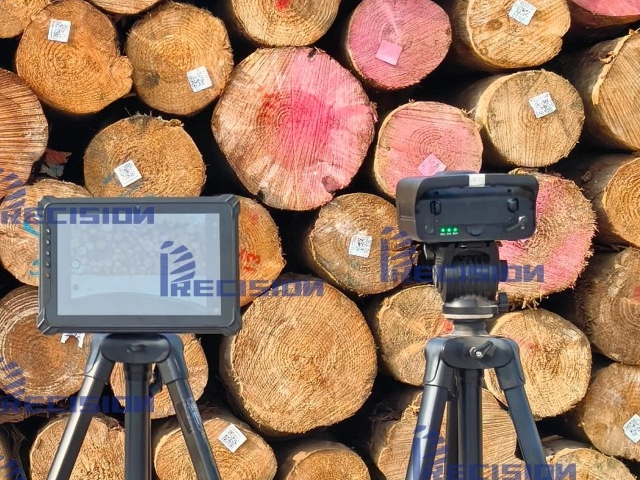
Defining a successful scaling operation requires looking at four critical metrics. You need high accuracy to ensure you pay only for usable wood. You need minimal safety incidents to protect your workforce. You need rapid processing to keep trucks moving. Finally, you need precise inventory tracking to feed the mill efficiently. Traditional manual methods struggle to balance all four simultaneously.
A log truck pulls into the yard. The driver secures the vehicle. A human scaler approaches with a scaling stick and a tally pad. They walk the length of the trailer, visually inspecting the logs. They measure the small end diameter of visible logs. They estimate the length. They look for sweep, crook, and taper. They make subjective deductions based on their experience. This process takes 15 to 40 minutes per truck. During this time, the truck sits idle. The loader operator waits. The yard backs up.
Manual scaling introduces significant variance into your inventory data. Two experienced scalers measuring the exact same truckload of Douglas Fir will often produce different total volumes. This happens because humans assess deductions subjectively. One scaler might deduct heavily for a slight sweep, while another ignores it. This variance makes precise inventory forecasting nearly impossible.
Safety remains a massive concern. Manual scaling requires personnel to walk on the ground near heavy loaders, shifting log stacks, and moving trucks. The log yard is inherently dangerous. 80,000-pound machines move constantly. Logs shift and fall off trailers. Removing people from the immediate drop zone drastically reduces the risk of fatal accidents.
Data entry lag creates another bottleneck. Scalers often write measurements on paper tally sheets. They hand these sheets to office staff at the end of a shift. The office staff then manually types the data into the inventory system. This process introduces keystroke errors and delays real-time inventory visibility by hours or even days. You cannot optimize a modern sawmill if your raw material data is 24 hours behind reality.
Operational pressures drive mills toward modernization. Severe labor shortages make it difficult to find and retain experienced scalers. Tighter profit margins demand stricter control over raw material costs. Mills can no longer afford to overpay for undersized or defective logs.
Implementing plywood log yard automation establishes a new baseline for intake. Modern yards require systems that capture data instantly, integrate directly with accounting software, and operate continuously regardless of weather conditions. The goal is to transform the log yard from a manual bottleneck into a digitized, high-flow gateway.
Automated scaling relies on a complex stack of hardware and software working in unison. You cannot simply point a standard camera at a log truck and expect accurate volume data. The technology requires industrial-grade components and highly trained neural networks to function in a dusty, vibrating environment.
A true vision-based log measurement system utilizes multiple sensor types mounted on a drive-through portal. Stereoscopic cameras capture high-resolution images from different angles to determine depth, mimicking human binocular vision. LiDAR sensors fire laser pulses to map the physical surface of the logs, creating a high-density 3D point cloud. Industrial-grade LED lighting arrays blast the load with consistent light, eliminating shadows from the sun or yard lights that could trick the software.
The software side relies heavily on edge computing. Processing high-resolution image data in the cloud introduces unacceptable latency, especially for rural mills with unstable internet connections. Edge servers located directly at the scanning portal process the data instantly. These servers run neural networks trained on millions of log images. The AI log scaler identifies the boundaries of each log face, distinguishing bark from wood and separating overlapping logs.
A core function of the system is assessing geometric defects. The software maps the curvature of a log to calculate sweep. It compares the diameter of both ends to determine taper. It easily detects out-of-roundness by analyzing the exact contour of the log face.
We must address technological limitations honestly. AI struggles with biological defects hidden from the surface. A camera cannot see internal rot or heart rot. Severe mud or packed snow obscuring the bark can also confuse the sensors. In these specific scenarios, the AI excels at flagging the anomaly, but human intervention is still required to make the final deduction call.
Raw pixel data means nothing without a translation mechanism. The timber volume calculator algorithm converts visual boundaries into standardized volume metrics. It takes the diameter, length, and geometric deductions, then applies the mathematical formulas required by your specific region.
Modern software must support multiple regional scaling rules simultaneously. Whether your operation uses JAS, Doyle, Scribner, Huber, or GOST, the algorithm adjusts instantly. This flexibility allows mills to purchase timber from various regions and standardize the data automatically upon intake.
To determine if automation can replace manual effort, we must evaluate both approaches across critical operational dimensions. We look at accuracy, speed, adaptability, and data integration.
Humans adapt incredibly well to suboptimal conditions. An experienced scaler can brush away snow or intuitively estimate the edge of a mud-covered log. AI systems require clear visual data. While multi-spectral cameras help penetrate light snow or rain, extreme weather can degrade automated accuracy.
However, AI dominates in consistency. Human scalers suffer from measurement drift. A scaler measuring logs at 6:00 AM will often record different deductions than they do at 4:00 PM after ten hours of walking the yard. Fatigue alters human judgment. An AI log diameter measuring machine applies the exact same criteria to the first log of the day and the ten-thousandth log of the day. This rigid consistency provides a much more reliable baseline for inventory management.
Implementing automation does not mean firing all your scalers. Instead, manual scaling evolves into an auditing function. You shift your best personnel from measuring every single log in the mud to verifying the system's accuracy from the scale house.
Auditors use manual measurements against known dimensions to periodically verify the AI. If the system flags a highly defective load, the auditor steps in to handle the exceptions. This workflow leverages human expertise for complex problem-solving while leaving the repetitive bulk measurement to the machine.
The speed difference is staggering. Measuring a full truckload manually takes a scaler anywhere from 15 to 40 minutes, depending on the log size and defect rate. During this time, the truck sits idle, burning fuel and taking up space.
Automated scanning portals process that same truck in seconds. The truck drives slowly through the portal, and the system captures all necessary data before the vehicle even reaches the unloading zone. This throughput multiplier eliminates yard congestion entirely.
Manual data entry creates a black hole of traceability. Once a paper tally sheet is filed, auditing a specific log from three weeks ago is impossible. You have numbers, but no visual proof.
Systems utilizing automatic log volume measurement instantly update inventory databases. More importantly, they link photographic evidence to every single measured log. If a supplier disputes a payment, you can pull up the exact image, diameter overlay, and deduction calculation for the specific load in question. This level of transparency eliminates vendor disputes.
Evaluation Metric | Manual Human Scaler | Automated AI System |
|---|---|---|
Consistency | Low (Subject to fatigue and drift) | Perfect (Rigid algorithmic application) |
Processing Speed | 15-40 minutes per truck | 10-30 seconds per truck |
Complex Defect Handling | High (Can identify internal rot intuitively) | Moderate (Flags anomalies for human review) |
Data Traceability | Poor (Paper trails, no visual proof) | Excellent (Instant ERP sync, photo evidence) |
Safety Risk | High (Ground personnel near machinery) | Low (Personnel relocated to control rooms) |
Adopting AI in heavy industry involves hidden challenges. Sales brochures often gloss over the rigorous implementation phase. Understanding these realities prevents costly deployment failures.
Many operations attempt a false economy by piecing together off-the-shelf cameras and basic open-source software. This always fails. True vision systems require purpose-built architecture. Consumer-grade lenses warp under extreme temperature fluctuations. Standard computer cases fill with sawdust and overheat within days.
Hardware durability is non-negotiable in harsh environments. You need ruggedized, IP67-rated enclosures. You need automated lens cleaning systems using compressed air to clear dust and rain. You need vibration-resistant mounts to prevent heavy machinery from knocking the cameras out of calibration. Always consult a specialized log measurement equipment supplier rather than a generic IT vendor.
Organizational pitfalls destroy more AI deployments than hardware failures. The most common mistake is a lack of shared workflows. If the IT department owns the network but the yard manager owns the scaling process, who owns the AI system? You must define system ownership clearly.
You also need strict guidelines for exception handling. When the AI flags a log it cannot read due to heavy mud, what happens next? Does the truck stop? Does an auditor get an alert on a tablet? Mapping these workflows before installation prevents yard standstills.
AI models require localized training on your specific regional timber species and typical yard conditions. Bark texture varies wildly between Southern Yellow Pine and Douglas Fir, and the neural network must learn these nuances.
Expect a mandatory shadowing phase lasting four to eight weeks. During this period, the AI runs parallel to your human scalers. You compare the automated outputs against manual tally sheets daily. You feed the discrepancies back into the system to refine the algorithm. Only after the system consistently matches or beats human accuracy do you switch to full automation.
Evaluate your network infrastructure honestly. Cloud processing relies entirely on your internet connection. If your mill is in a remote area with unstable internet, a cloud-based scaler will halt your entire yard every time the connection drops.
Edge computing solves this. On-premise servers process the images locally, ensuring continuous operation regardless of internet status. The system only uses the internet to sync lightweight text data to your central ERP system once the processing is complete.
Calculating the return on investment requires looking beyond simple labor reduction. The true value of automation impacts multiple departments across the mill.
Factor in the reduction of over-purchasing errors. Manual scalers often round up or miss slight tapers, causing the mill to pay for wood volume that does not actually exist. Automated systems measure down to the millimeter. Eliminating a 2% over-purchasing error across an entire year of intake often pays for the system outright.
Account for the value of faster truck turnaround times. Haulers get paid by the load, not by the hour. If your yard processes trucks in five minutes instead of forty, haulers will prioritize delivering to your mill over competitors. This optimized yard flow secures your raw material supply chain.
Secondary ROI comes from environmental and operational overhead reductions. Trucks waiting in line burn diesel. Reducing truck idling times lowers fuel consumption and decreases yard congestion. This directly reduces the mill's carbon footprint and improves local air quality, which assists with environmental compliance reporting.
Do not frame automation as a job killer. AI shifts the human role to higher-value tasks. You move personnel out of the mud and into the control room. They transition from manual measuring to quality assurance, exception handling, and system management. This reallocation improves worker retention, reduces physical strain, and creates a safer working environment.
An AI log scaler cannot entirely replace human judgment for complex, highly defective, or internally rotting logs. However, it successfully replaces manual measurement for the vast majority of standard inventory. It acts as a highly efficient primary filter, processing bulk volume with perfect consistency while routing exceptions to human experts.
When shortlisting vendors, prioritize those who offer robust edge-computing hardware and transparent accuracy guarantees. Avoid companies simply selling software without understanding the physical realities of a log yard. Demand clear implementation guidelines and seamless ERP integration capabilities.
To move forward with automation, take the following actions:
Audit your current manual scaling variance by having two different scalers measure the same 50 logs and comparing the results.
Calculate your average truck turnaround time to quantify the bottleneck cost of your current intake process.
Request a localized data audit from a reputable vendor to compare their automated outputs against your historical tally sheets.
Map out a new workflow that transitions your best scalers into quality assurance auditors.
A: AI log scalers typically operate within a 1-3% margin of error compared to expert human scalers. While humans intuitively assess hidden defects, AI provides vastly superior consistency across large volumes. It eliminates the measurement drift and fatigue that plague manual scaling during long shifts.
A: Yes, modern systems use multi-spectral cameras and LiDAR to penetrate light snow and map physical contours. The neural networks are trained on obscured logs. However, extreme cases of thick, packed mud may still trigger an exception alert, requiring a human auditor to review the specific log.
A: The system automatically calculates geometric deductions such as sweep, taper, and out-of-roundness by analyzing the 3D profile of the log. However, biological defects like internal rot cannot be seen by surface cameras and often require human input for accurate deduction.
A: Advanced software supports all major global scaling standards, including Doyle, Scribner, JAS, Huber, and GOST. The system toggles between these rules instantly, allowing mills to process timber from different regions without manually recalculating formulas.
A: A realistic timeline is typically 4 to 8 weeks. This includes physical hardware installation, software integration with your ERP, establishing shared workflows, and a mandatory shadowing phase where the machine learning models are calibrated to your specific regional timber species.
