
Hand phone / Whatsapp
+86-155-8805-8177
Views: 0 Author: Site Editor Publish Time: 2026-10-21 Origin: Site


Construction sites burn through traditional phenolic formwork fast. Edges swell, paper tears, and concrete finishes suffer. This reality pushes plant managers toward Polypropylene (PP) plastic films. Upgrading to a PP film faced plywood production line means balancing heavy initial capital expenditure against massive operational gains. You get lower defect rates, boards that survive thirty to fifty pours, and higher margins. But you have to pick the right machinery. Slapping plastic onto wood demands tight thermal control and specific cooling cycles. If your equipment cannot hold strict tolerances, you will face blistering, delamination, and severe production bottlenecks. This guide breaks down the exact machinery specs, manufacturing steps, and operational realities you need to know before signing a procurement contract.
Precision is Non-Negotiable: Applying PP film requires significantly tighter temperature and pressure tolerances than phenolic paper, making the calibration of the plywood hot press machine the most critical factor in line performance.
Process Integration: A high-yield plastic film plywood production line relies on seamless integration between core veneer preparation, cold pressing, and the final plywood film laminating line to prevent delamination and blistering.
Sustainability and Premium Pricing: Beyond durability, PP film is 100% recyclable and emits fewer VOCs during production, allowing manufacturers to command premium pricing in eco-conscious construction markets.
Vendor Evaluation: Selecting a plywood production line manufacturer should be based on their ability to provide custom plant layouts, verifiable thermal efficiency data, and localized post-installation support, rather than just upfront machinery costs.
ROI Timeline: While PP film machinery requires a higher initial investment, the operational ROI is typically realized within 18–24 months through premium product pricing, reduced material waste, and lower energy consumption per cycle.
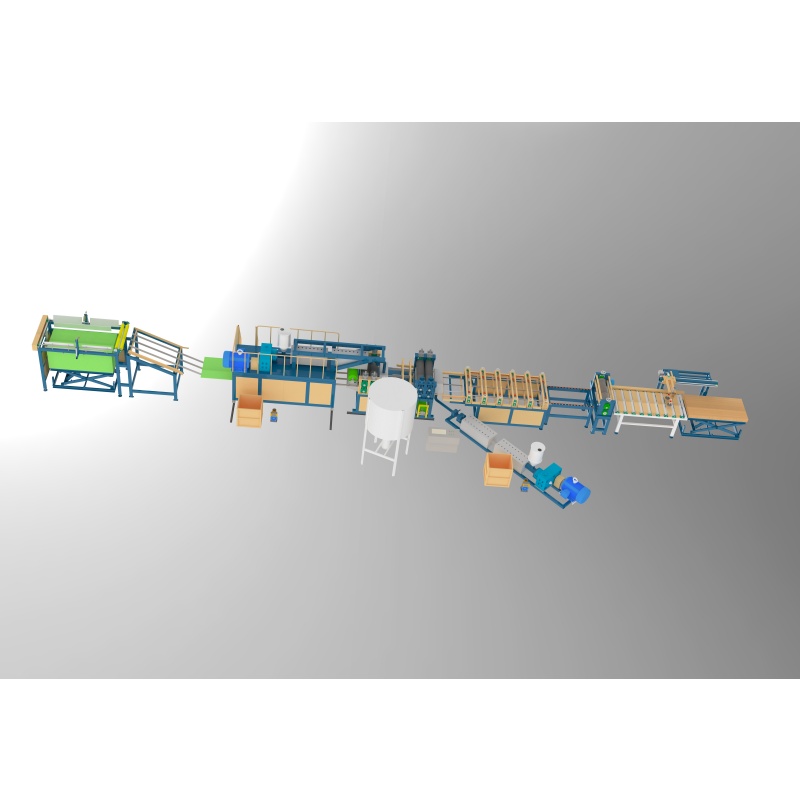
Traditional phenolic boards degrade rapidly after ten to fifteen uses in harsh concrete formwork applications. Moisture penetrates the edges, causing the wood core to swell and the phenolic paper to tear. PP film-faced boards solve this structural limitation. They offer thirty to fifty uses, superior water resistance, and a significantly smoother concrete finish that eliminates the need for secondary plastering on construction sites.
Polypropylene films arrive in various thicknesses, typically ranging from 0.3mm to 0.5mm. They feature different surface textures like smooth or anti-slip mesh patterns. The production line must possess the mechanical versatility to handle these variations without requiring extensive retooling or prolonged downtime between batches. Handling these synthetic polymers requires a fundamentally different approach to heat transfer than traditional paper overlays.
Transitioning to PP film requires specialized heating parameters and pressurized cooling processes to ensure the plastic bonds permanently to the wood veneer. If the heat is too high, the plastic melts and loses its structural integrity. If the heat is too low, the adhesive layer fails to penetrate the wood fibers, leading to delamination.
A successful implementation is measured by strict operational metrics:
A defect rate of less than 2% across continuous production shifts.
Consistent board thickness with a strict ±0.5mm tolerance.
Zero surface blistering or polymer shrinkage after the cooling cycle.
Maximum thermal efficiency during all pressing stages to control utility costs.
The foundation of any high-quality formwork board begins with core veneer preparation. Veneer peeling and drying equipment must operate with strict precision to maintain an optimal moisture content of 8% to 10%. Any deviation outside this range introduces trapped steam during the pressing phase. This steam aggressively attacks the plastic film adhesion and causes massive surface blistering.
Glue spreaders play an equally important role. The uniform application of melamine or Water Boiled Proof (WBP) glue prevents core gaps and ensures a solid, flat foundation for the plastic film. Modern spreaders utilize grooved rubber rollers and precise doctor rolls to control the exact grammage of glue applied per square meter. You want to hit around 160 to 180 grams per square meter to minimize waste while maximizing core strength.
The cold press serves as the initial consolidation stage. It tacks the glued veneers together before they reach the high-temperature zones. This machine pushes out trapped air between the veneer layers and flattens the core assembly.
Evaluating the pressure capacities and cycle times of the cold press keeps the line moving. You generally need pressures around 10 to 15 kg/cm² for a cycle time of 15 to 20 minutes. If the cold press cycle is too slow, it creates a bottleneck. If the pressure is insufficient, the veneers shift during automated loading into the hot press, causing edge defects and premature glue curing.
The core curing stage relies entirely on the performance of the plywood hot press machine. Technical specifications such as platen size, hydraulic cylinder configuration, and the choice of heating media dictate the final board quality. Thermal oil systems generally provide more consistent heat distribution compared to traditional steam boilers.
Temperature uniformity across all platens is your primary defense against board delamination and core weakness. Advanced presses utilize massive solid steel platens with precision-drilled internal channels. This ensures heat variance remains within a strict ±2°C margin across the entire pressing surface. Anything worse causes weak spots in the core.
Applying the plastic overlay requires a dedicated plywood film laminating line. This secondary pressing stage is specifically engineered for plastic films, featuring specialized mechanics that differ vastly from raw plywood production.
Cooling systems represent the most critical requirement in this phase. The board must be cooled under pressure using cold water circulation platens to stabilize the PP film. Removing the board while the plastic is still hot leads to immediate shrinkage, surface bubbling, and severe warping as the polymer rapidly contracts upon exposure to ambient air.
Manual levers do not work for plastic lamination. Modern production lines rely heavily on advanced Programmable Logic Controllers (PLCs) and Human-Machine Interfaces (HMIs). These systems provide real-time monitoring of pressure curves, temperature zones, and hydraulic performance.
Data logging capabilities allow plant managers to track quality assurance metrics across different production batches. If a specific batch of boards fails a delamination test, engineers pull the exact pressure and temperature logs from the HMI to identify the mechanical anomaly.
The final stage involves automated edge saws designed for precise dimensioning without chipping or tearing the plastic film overlay. Standard saw blades often melt the PP film due to friction. You need specific cutting geometries, like 96-tooth triple chip grind (TCG) blades, and high feed speeds.
Edge sealing machines then apply waterproof polyurethane or acrylic paint to the exposed wood core. Protecting the core from moisture ingress ensures the board achieves its maximum reuse potential on the job site.
The manufacturing process begins by laying up the glued veneers cross-grained to maximize structural integrity and dimensional stability. Operators or automated layup stations stack the veneers according to the required thickness profile.
The assembly transfers to the cold press. Specific pressure parameters eliminate trapped air and consolidate the core. This pre-pressing stage creates a rigid, manageable block that automated vacuum loaders can safely handle without shifting the individual veneer layers.
The consolidated core enters the first hot press cycle to cure the internal glue lines and solidify the base board. High pressure and temperatures exceeding 120°C activate the melamine or WBP resins, permanently bonding the veneers.
Following the hot press, the board undergoes calibration sanding. The sanding machines must create a perfectly flat surface. Any thickness variations, core overlaps, or surface roughness at this stage will telegraph directly through the thin plastic overlay. A 1mm ridge will punch right through the 0.5mm plastic film, causing visual defects and weak adhesion points.
The sanded base board feeds into the plastic film plywood production line. The PP film, which typically features a pre-applied hot-melt adhesive layer, is positioned over the top and bottom faces of the board.
The laminating press applies a highly specific heat and pressure profile designed to melt the adhesive layer into the wood fibers without degrading the PP polymer. Immediately following the heating cycle, the press switches to a pressurized cooling cycle. It circulates chilled water through the platens to drop the temperature rapidly, locking the plastic into place and preventing thermal shock.
Rigorous quality control checkpoints sit throughout the line. In-line moisture detection systems scan the veneers before gluing. Ultrasonic delamination testers check the internal integrity of the base boards after the first hot press.
Visual surface inspections verify film adhesion, checking for micro-blisters or edge peeling. Automated thickness gauges measure the final product at multiple points to ensure strict compliance with international formwork standards. They reject any boards that fall outside the acceptable tolerance range.
When selecting industrial plywood manufacturing equipment, plant managers must assess current output needs against future expansion capabilities.
A facility currently producing 500 boards per day may need to scale to 2000 boards within two years. Modular line designs offer the best scalability. Look for hot presses that allow for adding daylight openings later. Conveyor systems should easily integrate automated loaders and unloaders without requiring a complete factory floor redesign.
The choice between manual, semi-automatic, and fully automatic lines heavily impacts operational efficiency. In regions with high labor costs, investing in automated vacuum feeders, auto-stackers, and motorized conveyor systems provides a rapid return on investment.
Automation also significantly reduces manual handling damage. Forklift operators and manual laborers frequently chip board edges or scratch the plastic film during transport. Automated handling systems move the boards with precision, preserving the premium finish of the PP film.
Thermal efficiency directly impacts the daily operational costs of the plant. Comparing the efficiency of thermal oil boilers against traditional steam boilers is a mandatory step. Thermal oil retains heat longer and requires less energy to maintain target platen temperatures.
Modern machinery incorporates heavy insulation standards, closed-loop cooling systems, and heat recovery units. These technologies capture excess heat from the pressing cycles and redirect it to the veneer dryers, drastically lowering the overall energy footprint of the facility.
Analyzing the cost distribution across the entire production setup ensures capital is allocated effectively. The heaviest investment should always go toward the core machinery, specifically the hot presses and the laminating lines, as these dictate product quality.
When evaluating PP film faced plywood machinery, buyers must factor in the longevity of consumable parts. High-quality hydraulic seals, durable sanding belts, and robust platen surfaces require less frequent replacement. This reduces long-term maintenance expenditures and minimizes unplanned downtime.
Industrial equipment must meet strict local emission standards, particularly concerning VOCs released during the heating process. Advanced lines feature enclosed pressing zones and integrated extraction hoods to capture and filter airborne particulates and resin fumes.
Operator safety is equally important. High-pressure hydraulic zones must be secured with safety interlocks, emergency stop perimeters, and optical light curtains. If an operator breaks the light curtain plane during a press cycle, the machinery must halt instantly to prevent severe injury.
Production Parameter | Traditional Phenolic Film Line | PP Plastic Film Line |
|---|---|---|
Pressing Temperature | 130°C - 140°C (Curing) | Strictly controlled to melt adhesive without degrading polymer |
Cooling Requirement | Ambient air cooling is sufficient | Mandatory pressurized cold water circulation platens |
Surface Calibration | Standard wide-belt sanding acceptable | High-precision calibration sanding required (±0.5mm) |
Moisture Sensitivity | Forgiving to minor moisture variations | Highly sensitive (8-10% strict limit to prevent blistering) |
Board Reusability | 10 - 15 pour cycles | 30 - 50+ pour cycles |
The most common failure point in plastic film plywood production is high defect rates characterized by surface blistering and core delamination. The primary causes include inconsistent moisture content in the raw veneers, uneven hot press platens, or inadequate cooling times during the lamination phase.
To mitigate these risks, facilities must invest in high-precision veneer dryers equipped with automated moisture sorting. Plant engineers must mandate strict platen temperature audits during the initial commissioning phase. Use thermal imaging cameras to verify uniform heat distribution across every square inch of the press.
Unplanned machinery downtime destroys production schedules. The usual culprits are hydraulic fluid leaks, sensor failures, or a lack of available spare parts for proprietary machinery components.
Standardizing components is the most effective mitigation strategy. Ensure the machinery utilizes internationally available PLC brands and standard hydraulic valves from reputable manufacturers. Establish a rigorous preventative maintenance schedule. Daily hydraulic pressure checks and weekly platen cleaning prevent minor wear from escalating into catastrophic mechanical failures.
Transitioning from manual, lever-operated presses to digital, touchscreen-controlled automated lines creates a significant skill gap for existing factory personnel. Operators unfamiliar with digital pressure curves may misconfigure the machinery, leading to ruined batches.
Mitigate this by mandating comprehensive, vendor-led training programs during the installation phase. Create standardized operating procedure (SOP) documentation tailored for digital troubleshooting. Ensure operators know exactly how to respond to automated error codes and system alarms without waiting for engineering support.
Finding a reliable plywood production line manufacturer takes work. You need a partner who understands the mechanical realities of your specific factory.
Avoid off-the-shelf solutions when procuring heavy industrial machinery. The manufacturer must possess the engineering capabilities to design the line around your specific factory footprint, local climate conditions, and raw material characteristics.
Customization extends to the hydraulic power units, the layout of the cooling water infrastructure, and the specific programming of the PLC to handle the exact type of PP film your facility intends to use.
Always evaluate case studies and request references for existing PP film lines installed by the vendor. Seeing a machine operate in a real-world, high-volume factory provides insights that a glossy brochure cannot.
Conducting a Factory Acceptance Test (FAT) is non-negotiable. Ship a batch of your own raw veneers and PP film to the vendor's facility. Demand a full production run before signing off on the final shipment. This ensures the machinery meets your specific quality standards and complies with local safety regulations.
The procurement contract must explicitly detail the vendor's responsibilities regarding installation. Vendor-supplied technicians are required for on-site assembly, precise platen calibration, and initial operator training.
Evaluate the Service Level Agreements (SLAs) for after-sales support. Look for guarantees regarding remote digital troubleshooting, lifetime software updates for the HMI, and strict delivery timelines for critical spare parts to ensure your line remains operational year-round.
Audit your factory floor space and electrical capacity to ensure it can handle the footprint and power draw of a new laminating line.
Define your exact daily output targets and the specific thickness of the PP films you plan to run before contacting vendors.
Request detailed technical proposals, FAT protocols, and thermal efficiency data from at least three vetted machinery manufacturers.
Ship your raw veneers and plastic film to the vendor for a full-scale Factory Acceptance Test before authorizing the final shipment.
A: A PP film line requires specialized pressurized cooling platens and high-precision calibration sanding. Phenolic paper cures under heat and air-cools. Plastic film melts and will shrink or blister without immediate water-cooled pressing. PP lines also eliminate toxic formaldehyde emissions associated with phenolic resins.
A: Retrofitting is technically possible but highly risky. You must install cooling platens, upgrade hydraulic controls, and integrate new PLCs. Due to the high risk of uneven pressure and thermal inconsistencies, investing in a dedicated laminating line is far more reliable.
A: The ideal moisture content is strictly between 8% and 10%. If moisture exceeds this range, the press heat turns excess water into steam. This steam gets trapped under the impermeable plastic film, causing massive surface blisters and complete delamination.
A: A standard semi-automatic line requires between 3,000 to 5,000 square meters. This footprint includes zones for raw veneer storage, cold and hot pressing areas, mandatory cooling staging areas, and final edge trimming stations.
A: Yes. Polypropylene plastic is non-toxic and 100% recyclable. Because the PP film protects the wood core effectively, boards can be reused up to fifty times. This extended lifespan drastically reduces overall timber consumption in the construction industry.
A: The timeline from machinery delivery to full commercial production ranges from 30 to 60 days. This depends on automation complexity, factory infrastructure readiness, and the time required to calibrate the heating and cooling cycles.
